On Tuesday, November 10, the D.C. Council advanced the RFK Campus Master Plan on the first of two votes. It trimmed density near Kingman Park and left the plan one vote short of adoption. That evening, DC News Now reported, neighbors from Kingman Park, Hill East and Wards 7 and 8 packed a meeting at St. Coletta of Greater Washington. They asked about affordable housing, transit and energy. Organizers from the new coalition, RFK for All, said they were not trying to stop the stadium. They wanted the neighborhood promised around it to be delivered, and one speaker set the team's nine home games against the rest of the year, when neighbors live beside the campus every day.
That contrast gets at the question a buyer touring the eastern end of Capitol Hill this winter has to answer. The stadium has the firmest date in the whole RFK project. The parts that will shape an ordinary weekday on the blocks closest to the campus are the garages, the Metro station, the bus line, the pedestrian bridge and the Reservation 13 parcels to the south. All of them run on later or looser schedules. A buyer comparing Hill East with the rest of the Hill is pricing several projects on different timelines, and the one that makes headlines is the one least tied to daily life.
2026: What Is Already Settled
The legal groundwork is done. Congress transferred jurisdiction over the RFK campus to the District in a law signed January 6, 2025, and the Council approved the transfer on February 4, 2025. The Council's second vote on the Commanders deal came in September 2025. According to the Council's recap, the deal covers a new stadium, a sportsplex, housing, commercial development and a community benefits commitment of at least $50 million.
Work has begun on the site itself. The Hill Rag described the old stadium as dismantled in September, and Events DC's August 2026 demolition update reported that 95% of demolition waste had been diverted from landfill, including 81,000 tons of concrete reused on the campus. The Commanders said enabling site work started in June. On August 11 the team named a joint venture of Clark Construction, Mortenson and SmootDC to build the stadium.
The plan for the land around the stadium is further along than it was in the spring. The Office of Planning published the draft master plan in June 2026 and sent the revised plan to the Council on September 24. Public comment on the draft closed August 14. Under the deal, the campus would get 6,000 homes, at least 1,800 of them affordable. The Hill Rag reported that the draft plan covers 6 to 8 million square feet of mixed-use development across six districts. The Commanders would lead the Stadium, Plaza and Riverfront districts, and the District would lead the other three.
For a buyer, these settled items set the scale of what is coming. They do not tell you what it will be like to live two blocks away.
Spring 2027: The Stadium Starts, the Garages Do Not
Stadium construction is expected to begin in spring 2027. The parking that comes with it is less settled. The current concept puts 6,000 spaces in two garages: G1, south of the stadium, with 2,400 spaces, and G2, north of it, with 3,600. On October 1 the National Capital Planning Commission gave an advisory review of those concepts. It asked for more study of height, below-grade parking, lighting and ground-floor uses.
Neighbors have pushed back since then. WUSA9 reported that Kingman Park residents objected in October to G2's size and its location across from homes. The same report said soil borings were under way across the campus, but the project office said no garage construction was happening and the garage designs and permits were not finished. On November 15, East of the River reported that ANC 7D commissioners supported Councilmembers' requests for street-level retail, more below-grade parking, fewer garage spaces, and moving or swapping the two structures.
This matters to Hill East because the southern garage sits on the side of the campus nearest its rowhouse blocks. A buyer looking at a house near C Street SE or Independence Avenue this winter is buying before anyone knows the final size, height or placement of the structure that will handle a large share of game-day traffic.
2030: Opening Day and the Transit Question
The Commanders are targeting spring 2030 to finish the stadium. In July, East of the River laid out the transit numbers from a May 2026 WMATA study of the 65,000-seat stadium. Metro rail and bus would carry 26,000 to 38,000 people to a major event, and about 25,000 would arrive by car. Stadium-Armory station can handle about 14,000 riders an hour today. Without upgrades, WMATA warned, clearing a post-game crowd could take more than two hours. With new elevators, escalators, stairs and an expanded north entrance, clearing could drop to roughly 60 to 90 minutes.
The station rebuild will be felt before any game is played. Metro general manager Randy Clarke told a July 1 Council roundtable that the work would need significant outages on tracks that serve Largo and New Carrollton. For Hill East residents who use Stadium-Armory to commute, those outages could reach their commute years before 2030.
The second transit piece is the proposed Gold Line, a bus rapid transit route along H Street and Benning Road NE between Union Station and a new transit center on the campus. DDOT director Sharon Kershbaum put the cost of the Union Station-to-RFK segment at $75 million. Clarke said agreements needed to be in place by summer 2026 for design and construction to start in time for a 2030 opening. The game-day Traffic Operations and Parking Plan will not be drafted until closer to the stadium's opening. DDOT also told the master plan webinar that a detailed traffic analysis would follow environmental review, expected by summer 2027 at the latest. Ward 6 Councilmember Charles Allen warned in July that heavy reliance on private cars could be disastrous.
On the 2030 date, then, the building has a schedule, while the station, the bus line and the street plan that decide how a Sunday works in Hill East do not yet have firm ones.
2032: The Connections Arrive Last
Two items that matter most to the blocks next to the campus are tied to 2032. The East Capitol pedestrian bridge over I-295 and the CSX tracks is now expected in 2032, not 2030. WMATA has said a Gold Line segment running farther east toward Benning Road could also be built by 2032 if earlier goals are met. The master development plan promises trails, riverfront access, public space and stronger links to nearby neighborhoods. East of the River's July piece put it plainly: for a Hill East resident near C Street NE, the stadium could be "close enough to hear and still awkward to reach."
Someone buying in Hill East in 2026 should plan on at least two years of stadium operations before the walking connections catch up.
South of the Campus: Reservation 13 Runs on Its Own Clock
The Hill East District, on the former DC General site south of RFK, shows how long the time between approval and construction can be. Phase I is built, and the Hill Rag identifies its two buildings as the Park Kennedy apartments and The Ethel. The Deputy Mayor for Planning and Economic Development lists Park Kennedy, with 262 homes including 31 affordable units and more than 12,000 square feet of retail, and The Ethel, with 100 permanent supportive housing units and more than 12,000 square feet of retail. Donatelli Development and Blue Skye Development were the Phase I developers.
The next phase is approved but not under construction. On July 14, 2026, the Council approved revised terms for R13 Community Partners' Bundle 2 parcels C, E and H at 1900 Massachusetts Avenue SE. The plans include townhouses, multifamily and mixed-use buildings, a hotel and a public park on Parcel E, and the District now takes on building the park. The Hill Rag reported that a land disposition agreement, zoning review, financing, permits and final designs were all still to come, and that large parts of the 67-acre site remained undeveloped. Earlier plans described Bundle 2 as more than 1,200 homes, about 60,000 square feet of retail and a 150-room hotel, and the paper noted the final numbers could change.
For buyers, Reservation 13 is the more local test of the area's prospects. The new retail and the park would sit within walking distance of Hill East rowhouses on ordinary weekdays, with or without a game.
What Navy Yard Does and Does Not Predict
Navy Yard is the usual comparison. In 2018, the Washington Post reported that the number of Near Southeast households grew from 977 to 3,809 over the previous decade. Residential and commercial property value rose from $1.15 billion in 2008 to $2.65 billion in 2018. The same reporting described traffic and parking pressure next to the new parks, restaurants and housing. The District's own study of its sports facilities measures gains in commercial terms. It reports 2.1 million square feet of spurred development near Nationals Park and 1.3 million near Audi Field, with 35% office and retail rent premiums near each.
The difference is the number of event days. In 2019, NPR quoted a Councilmember cautioning that an NFL stadium with few event days may not generate the activity of a ballpark or a multi-sport arena. The same report credited much of Navy Yard's growth to public investment in parks, public space and the Anacostia. If that holds at RFK, most of the value Hill East gains will come from the 6,000 homes, the retail, the riverfront and Reservation 13 filling in. The games will contribute less. Phil Coppage, owner of Cynthia Bar and Bistro on H Street, is organizing a business improvement district between Union Station and the stadium, and he told DC News Now that "development cannot happen fast enough."
Pricing the Block
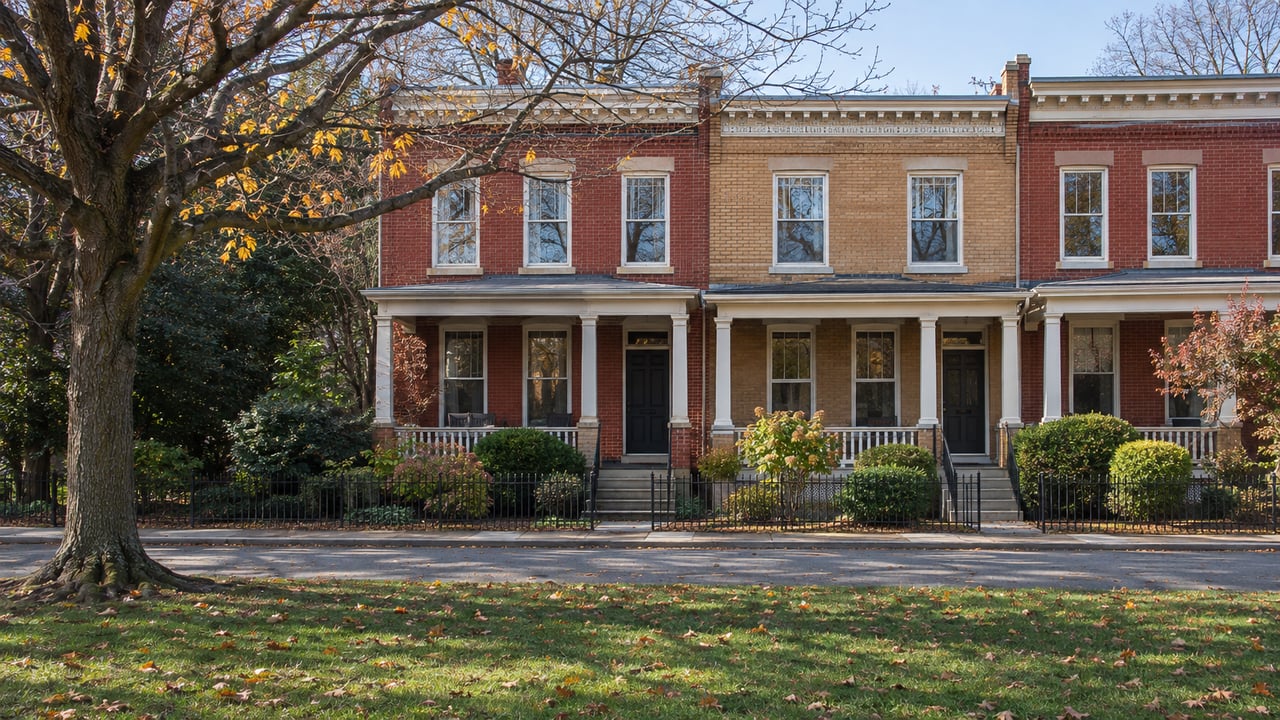
For a buyer comparing Hill East with blocks closer to Eastern Market or Lincoln Park, this timeline leads to three practical checks. First, look at where a house sits relative to the southern garage concept and the main approach routes. The draft plan sends traffic along Southeast Boulevard under Barney Circle, Independence Avenue and C Street from the west, Benning Road from the east, and a rebuilt Oklahoma Avenue NE from the north. Second, check how much the household relies on Stadium-Armory, since the station rebuild will bring outages before it brings capacity. Third, find out how far the house is from the Reservation 13 parcels. If Bundle 2 gets built, that is where weekday change will show up first.
The seasonal timing is also worth knowing. Writing in the Hill Rag in March, a longtime Capitol Hill broker described the Hill's traditional spring market as starting in the third or fourth week of January and slowing after July 4. A buyer who settles the questions above in December will be ready when that inventory arrives, and well ahead of the Council's next step on the RFK plan. Our buyer's guide, along with earlier posts on renovation timing on Capitol Hill and classic rowhouse layouts, can help with the rest of the Hill purchase.
If you are weighing a rowhouse near the RFK campus, Infinity Group can talk through that address against the garage concepts, transit plans and Reservation 13 parcels as they stand today. Request a Private Market Consultation to start that conversation before the January market opens.