Most people who buy a rowhouse on Capitol Hill assume the historic district will tell them what they can't do. Paint color, they guess. Landscaping. Maybe the shutters. They brace for a design fight.
That's not where the friction actually is. Capitol Hill's historic district doesn't touch your paint color or your garden at all. What it touches is timing, and the timing problem isn't obvious until you're the one waiting on it. The Capitol Hill Restoration Society, the neighborhood's own preservation advocacy group since 1955, puts it plainly on its own site: a project needing full board review can take four to eight weeks for that reason alone, because the review board meets only once a month. Miss the filing window for this month's docket and you've lost a full cycle before a contractor has touched a single brick.
That single fact, a monthly meeting cadence, is the thing that turns a straightforward roof deck or window swap into a project measured in seasons rather than weeks. It's worth understanding before you write an offer, and worth planning around before you list.
Two Approvals, Not One
Capitol Hill is part of Washington's largest historic district, placed on the National Register of Historic Places in 1976. That designation means some exterior work visible from a public street, alley, or sidewalk runs through two separate reviews before a shovel touches the ground.
The first is ordinary: the DC Department of Buildings issues construction permits the same way it does anywhere else in the city, checking code compliance, structural safety, and zoning conformance. The second is the one buyers underestimate: the Historic Preservation Office, a division of DC's Office of Planning, reviews the same project for compatibility with the neighborhood's historic character. Minor or routine work can be signed off administratively by HPO staff. Anything larger goes to the Historic Preservation Review Board for a public hearing and a formal vote.
The two tracks aren't parallel. They're sequential. Historic approval has to come first, because the Department of Buildings won't issue a permit for exterior work without it in hand. The Capitol Hill Restoration Society's own guidance walks new owners through this exact sequence, and it's worth reading before you assume a "permit" is a single form.
Your Advisory Neighborhood Commissioner and the Restoration Society itself are also part of this process. They're not decision makers, but they routinely submit comments that reviewers weigh, and a project that shows up at a hearing without any outreach to either group tends to draw more questions than one that has.
What's Actually Regulated, and What Isn't
The part that surprises most owners is how narrow the actual restriction is. The Capitol Hill Restoration Society's own FAQ answers several of the questions owners ask most, and the answers cut against the popular assumption that a historic district controls almost everything you see from the street.
Not regulated at all:
- Paint color. The preservation law doesn't touch it.
- Landscaping and plantings, in the ordinary sense.
- Window air conditioning units, security bars, storm doors, and storm windows. None of these require a building permit, so none of them trigger historic review.
Regulated, and requiring HPO or HPRB sign off before a building permit is issued:
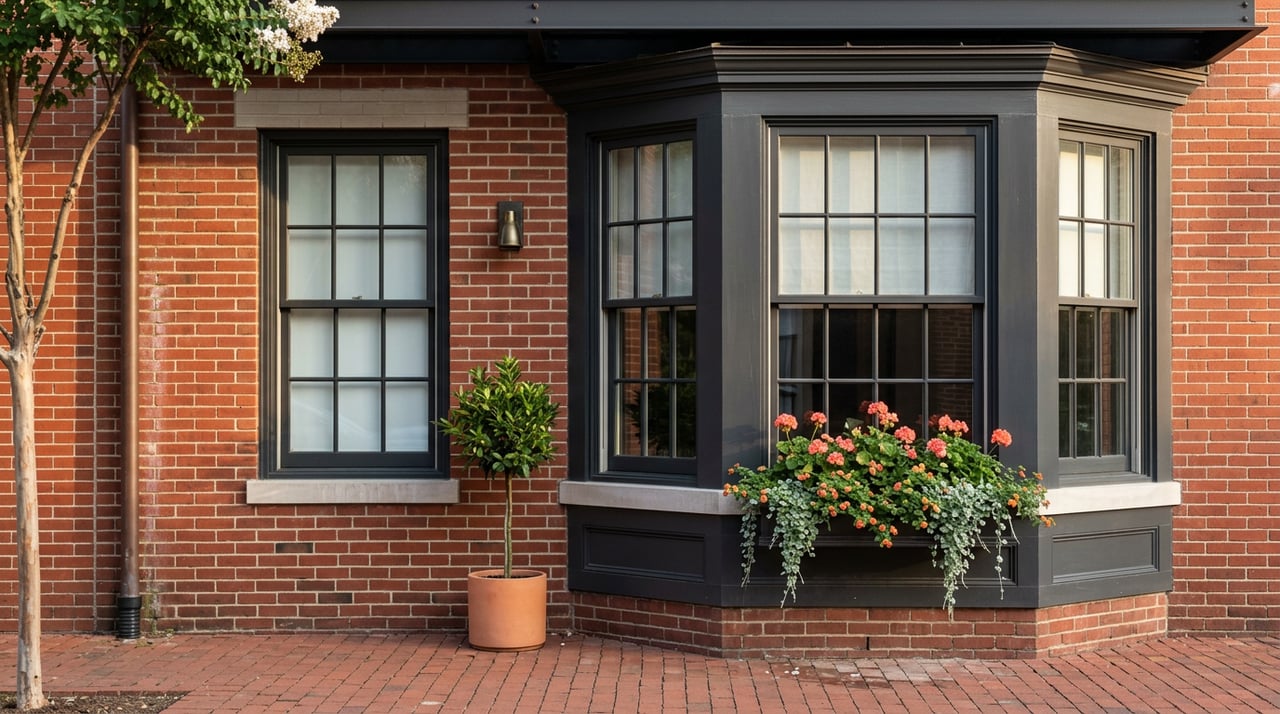
- Window replacement, especially on elevations visible from the street
- Roof replacement, including material and color
- Additions, new construction, and demolition
- Hardscape: front walks, driveways, and retaining walls
The one that trips people up most is adding a floor. According to the Restoration Society, an additional story on top of a historic rowhouse has generally been found by the review board to be incompatible with the district's purpose, since it changes the building's height, mass, and roofline. Roof decks can sometimes work, but only when they're invisible from the public street and set toward the rear of the property.
None of this is arbitrary. It's applying the same compatibility standard, rooted in the Secretary of the Interior's Standards for Rehabilitation, across every application. But it means the actual list of things you can't change is shorter than most buyers expect, and the actual list of things that take months to change is longer.
A Real Case, and Why the Board Didn't Split the Difference
The stakes of skipping this process aren't hypothetical. In 2017, a developer on Capitol Hill pulled a permit for a rear addition without it ever being referred to the Historic Preservation Review Board, as required for work in the district. Once the omission surfaced, the city issued a stop-work order. The applicant then filed a Historic Preservation Application after the fact, proposing a three-story rear addition and a one-story roof addition on a building the district considers a contributing structure.
The board didn't approve the whole thing and it didn't reject the whole thing either. It found the two-story portion of the rear addition compatible with the historic district's character, but ruled the third floor and roof addition incompatible, in a 9-0 vote, effectively requiring the extra floor to come down. The case is documented on the community blog Capitol Hill Corner, and it's a clean illustration of a pattern that shows up across historic-district permitting: getting ahead of the review board doesn't save time, it just moves the same decision to after construction, when reversing it costs far more than waiting would have.
What This Means If You're Timing a Sale
For anyone weighing pre-sale improvements before a Capitol Hill listing, the calendar mechanics matter more than the design guidelines. A staff-level administrative approval for a modest, in-kind repair can move in a few weeks. A project that needs a full HPRB hearing is a different animal: the filing deadline has to line up with the board's monthly meeting schedule, community comment periods run in the weeks before the hearing, and if the project also needs zoning relief from the Board of Zoning Adjustment, that's a separate track that can add several more months on its own.
Put those pieces together and the range NMREG's Capitol Hill historic-district guide gives—roughly three to nine months for modest exterior work and six to twelve months or more for anything larger— stops looking like padding and starts looking like the sum of a few unavoidable waiting periods stacked end to end.
That has a direct bearing on how a seller sequences a listing. If a roof deck or facade repair is meant to be part of the presentation, the historic review clock needs to start well before a photographer or stager is booked, not after. A concierge-funded improvement that looks simple on paper, a new roof, replacement windows, a rebuilt stoop, can still be sitting in a review queue on the date you hoped to go live. Building that lead time into the plan from the first walk-through, rather than discovering it mid-renovation, is the difference between a listing that goes to market on schedule and one that doesn't.
Frequently Asked Questions
Does every exterior change on Capitol Hill require a hearing? No. Many routine or in-kind repairs can be approved administratively by Historic Preservation Office staff without going before the full board. Larger changes, additions, and new construction are the ones that require a public HPRB hearing.
Can I do work on the rear of my house without review? Rear work that isn't visible from the street is often treated differently, but visibility is evaluated case by case, not assumed. It's worth confirming with HPO before assuming rear-facing work is automatically exempt.
Is there financial help available for historic preservation work? There are no local tax credits for bringing a property up to code, but the city's Historic Preservation Office administers a grant program of up to $25,000 for qualifying low and moderate income homeowners in specific historic districts, so it's not a resource for every buyer, but it exists.
If you're weighing a Capitol Hill purchase with renovation plans already in mind, or timing a sale around pre-sale improvements, the calendar questions above are worth answering before you're under contract, not after. Infinity Group works this exact process with Capitol Hill clients regularly and can help you sequence a project or a listing around it. Request a Private Market Consultation to talk through your timeline before you commit to one.
This article is general information, not legal, tax or financial advice. Consult a qualified professional about your situation.